
Domino Fever - Tile Master
WildCard GamesBoard
4.7261.00 Reviews
- Version
- 1.18.1
- Installs
- 500.00K
- Age Rating
- Everyone
Screenshots
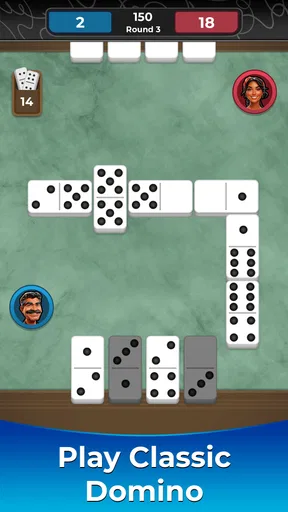
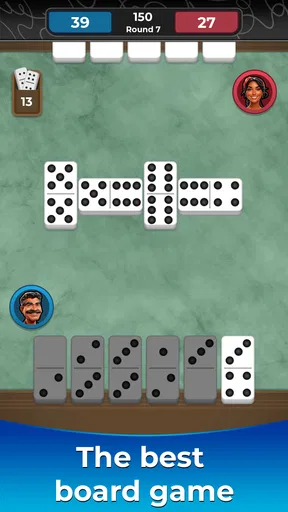
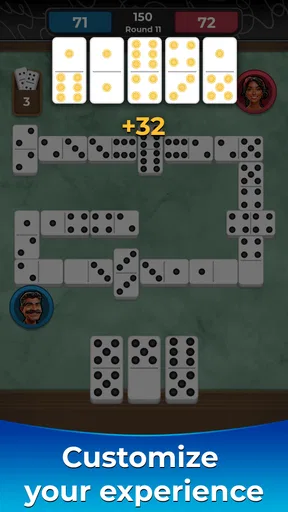



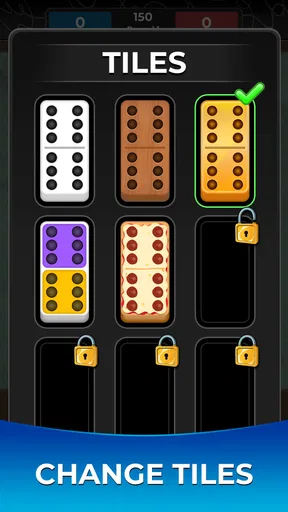
Our Review of Domino Fever - Tile Master
 Analysis by Appyee
I tried Domino Fever - Tile Master as a quick board game for shared-device use, and I came away with a fairly clear impression: it is easiest to enjoy when everyone treats it as a casual, turn-based puzzle session rather than as a full replacement for a physical domino set. The basic appeal is immediate. You place tiles, look for useful connections, and try to make decisions that leave you in a stronger position than the other side. That familiar structure makes it approachable, while the small screen gives each round a convenient, low-commitment format.
It is a free board game from WildCard Games, aimed at an Everyone audience. The game has reached over 500 thousand installs and holds a 4.7 average from around 3.7 thousand ratings, which suggests that its simple domino concept has found a receptive audience. I would not read those figures as proof that it will suit every player, though. The real question is whether you want a focused digital domino experience or a richer multiplayer board-game platform with more variety, social tools, and long-term progression.
How it fits into a shared household
The most natural use I found was passing the phone or tablet between two people during a short break. A round can occupy the kind of spare time that is awkward for a larger game: waiting for food, sitting together after dinner, or taking a brief pause from a longer activity. Because the rules are familiar, one person can usually begin without a long explanation, while the other can learn by watching the first few turns.
That shared-device format also changes how I judge the game. On a personal phone, a domino app can be something I open alone and put away again. On a household device, clarity matters more. Players need to know whose turn it is, which tiles are available, and what the current board position means without having to remember a complicated interface. Domino Fever works best when both people are physically present and can discuss moves naturally.
This is not the same as a family game with a large table, pieces spread out in front of everyone, and room for several people to comment at once. A phone screen creates a narrow viewing area. I found that the person holding the device has the clearest view, so passing it fairly is part of the experience. A tablet-sized screen would be more comfortable for two people watching together, but the game’s board-game format still makes it suitable for quick one-device sessions.
One useful habit is to agree before starting whether advice is allowed. If a parent, partner, or friend points out every possible move, the game quickly becomes a shared puzzle rather than a contest. That can be enjoyable for beginners, but it removes some of the decision-making for the person whose turn it is. For a more competitive session, I would let each player inspect the board independently and avoid reaching for the device until the turn changes.
What the first session feels like
The opening experience is deliberately straightforward. You are not asked to absorb a large rulebook before seeing the board. The central task is to understand the current tile arrangement, identify legal connections, and choose whether a move helps immediately or preserves better options for later. That makes the game friendly to someone who already knows dominoes and manageable for someone returning to the game after a long time.
My advice for a first shared session is to treat the opening round as practice rather than a serious match. Pay attention to how the available tiles are displayed and how the game communicates a valid move. The small details of the interface matter more than they might in a physical set, because on a screen you cannot simply pick up every tile and compare it at your own pace. Once both players understand the visual rhythm, the turns become much quicker.
The short-session design is one of its strongest household qualities. I can imagine using it when one person has only a few minutes but still wants something interactive. It does not require arranging a table, sorting physical pieces, or finding a box that may have been put away. That convenience is the main reason I would choose it over traditional dominoes in a busy moment.
Setting boundaries before sharing the device
Domino Fever is free to install, which removes the most obvious barrier to trying it together. Still, free access should not be confused with a complete description of every part of the mobile experience. When I use any game on a household phone, I prefer to decide in advance who is allowed to install it, when it can be played, and whether younger users may open it without an adult nearby. Those are practical household rules, not features I would assume the game itself provides.
The Everyone age rating makes the game easier to consider for a broad household audience. I would still introduce it differently depending on the player. For a child who already understands matching and turn-taking, the board may be an inviting way to practise planning. For a younger child who finds losing frustrating, an adult may need to frame the session as learning rather than winning. The age label does not tell me how each individual will react to competition, so the first few sessions are worth supervising.
Account boundaries are another sensible consideration. If several people use one device, I would avoid assuming that progress, settings, or play history should be shared automatically. Before handing the game to someone else, check whose device profile is active and whether the next player is comfortable continuing from the current state. I am not treating that as a special function of this title; it is simply good practice whenever a game is used by more than one person.
The same applies to notifications and interruptions. A shared phone may belong to one person, while the game is being played by another. Agreeing that a round can be paused or ended when the owner needs the device prevents a casual match from becoming an argument. Dominoes are easy to restart, so there is little value in turning a short entertainment session into a household obligation.
Keeping turns clear between players
Coordination is where a digital version differs most from physical dominoes. Around a table, each person can see the pieces and naturally follows the conversation. On a phone, the player holding the screen has control of both the board and the next action. I found it helpful to announce the turn aloud, especially when playing with someone who was looking away for a moment.
A simple rotation works well: one player holds the device for a turn, places the tile, and passes it immediately. That keeps the physical control from becoming an advantage. If one person holds the phone for the entire round, the other player may end up watching rather than participating, even when the rules are fair. Passing after every move makes the session feel more like a tabletop game.
For children, I would add a second boundary: let them explain why they want a move before another player suggests one. This turns the game into a small exercise in reasoning without making it feel like homework. The strongest move is not always the most obvious connection, and asking a player to describe their choice encourages them to notice future possibilities instead of only reacting to the current turn.
For adults, the useful variation is to separate advice from analysis. After a round, discuss which choices changed the result. During the round, allow each person to make their own decisions. That preserves the tension that makes dominoes worthwhile and avoids the common shared-screen problem where the more experienced player quietly takes over.
Where the strategy has real value
The game’s strategic interest comes from looking beyond the tile that fits right now. A move can solve an immediate problem but also expose which numbers you are likely to need later. I found that the most satisfying decisions were not the flashy ones. They were the quiet choices that kept several options open while making the opponent’s next turn less comfortable.
One practical tip is to resist playing the first acceptable tile automatically. Before committing, scan both ends of the layout and consider whether the move leaves you with a useful follow-up. This is particularly important when the board begins to narrow your choices. A player who only reacts to the current opening can run out of workable options even after making several legal moves.
A second tip is to watch the shape of the board, not just the numbers on your own tiles. If one end repeatedly attracts play, it may be worth preserving access to the other end when possible. That gives you a fallback route and makes your hand less dependent on one specific connection. I would not call this a hidden mode or a special mechanic; it is a strategic way to get more depth from the basic board.
A third useful approach is to use the early turns to learn the other player’s habits. Some people prefer quick, safe placements, while others hold a flexible tile for later. In a household match, this creates a nice difference between playing against a stranger and playing against someone you know. You can adapt your decisions to the person across from you, but you should avoid assuming that a previous round guarantees the same pattern in the next one.
That said, the game’s appeal depends heavily on how much variety you expect. If you want a board game with many distinct modes, elaborate campaigns, character abilities, or a large collection of unrelated challenges, this is probably too focused. Its strength is the concentration of one familiar idea, not an enormous amount of content layered around it.
Who should choose it, and who should skip it
I would recommend it to someone who wants a recognizable domino game that can be started quickly and shared in the same room. It is also a reasonable choice for a player who likes light strategy but does not want to learn a complex board game. The Everyone rating and free price make the first trial easy, especially for households that want to see whether a child or occasional player enjoys the format.
I would be more cautious about recommending it to someone seeking a deep competitive environment. Serious players may prefer physical dominoes for the richer social atmosphere, or another digital board-game option with stronger online competition and more extensive match tools. Likewise, people who dislike repeating a single style of play may lose interest sooner than fans of focused, familiar rules.
It may also be a poor fit for a household that wants four or more people involved at once. Passing one device around a larger group can make turns feel slow and give some players too much time waiting. For that situation, a physical set or a multiplayer game designed around simultaneous shared viewing would be more comfortable. Domino Fever makes the most sense for one player at a time, or for two people coordinating closely.
Everyday use, age, and trust
Imagine two people sharing a device after dinner. One wants a quick game, while the other is tired and does not want to read instructions. This is the kind of moment where the app makes sense. The experienced player can explain the goal while the beginner studies the board, and the first round can establish the pace without committing the household to a long evening of gaming.
With children, I would use it as a short, supervised activity rather than an unattended digital pastime. The board can encourage matching, planning, and turn-taking, but the adult’s role is still important when frustration appears. A child may focus on the tile they want to place and overlook the effect on the next turn. Asking them to pause, name the available choices, and then decide gives the game more value than simply helping them win.
Trust also matters between adults. If the device belongs to one person, the owner should remain in control of installation and account decisions. If the game is being used on a shared tablet, agree on how sessions are started and ended. These boundaries are especially useful when several people have different comfort levels with mobile games. The app can support a shared activity, but it does not replace household communication.
The current version is 1.18.1 and it runs on Android from version 8.0 onward. That makes it accessible to people who keep an older compatible phone rather than upgrading frequently. Before planning a shared session, I would still make sure the device is charged, the screen is comfortable for both players, and the owner is not expecting an urgent call. Those small preparations matter more than they sound when a game relies on passing a personal device back and forth.
How it compares with physical dominoes and broader game apps
Physical dominoes remain better when the social atmosphere is the main point. The pieces are visible to everyone, players can gesture naturally, and several people can gather around the same surface. A physical set also feels less tied to one person’s phone. If you already own dominoes and have a table available, I would choose them for a relaxed group evening.
The app wins on convenience. It removes setup, keeps the board tidy, and fits into a spare moment. There is no need to search for missing pieces or decide where to store the set afterward. For a person who enjoys the decisions but not the preparation, that difference is meaningful.
Compared with broad board-game collections, this title is more approachable but less varied. A collection app can offer cards, dice, strategy games, and party activities in one place, yet it may also make a simple session feel buried under menus and choices. Here, the narrow focus is an advantage when you already know you want dominoes. It becomes a limitation when you want novelty after a few rounds.
My practical comparison is therefore simple. Choose this game for quick, focused domino sessions on a compatible Android device. Choose a physical set for larger groups and stronger face-to-face interaction. Choose a wider board-game app when variety matters more than the specific rhythm of placing tiles and planning the next connection.
My household verdict
After using Domino Fever as a shared board game, I see it as a convenient and accessible option rather than an all-purpose family gaming hub. WildCard Games has kept the central idea easy to approach, and the free entry point makes experimentation painless. The 4.7 average and growing install base fit my experience of a game that is easy to understand and satisfying in short bursts, although those figures should not be mistaken for a guarantee of lasting variety.
The best results come from setting simple boundaries: decide who is playing, pass the device fairly, keep advice under control, and supervise younger users until you know how they respond to competition. Those steps are not complicated, but they make the difference between an engaging shared match and one person silently controlling the whole session.
I would recommend it to households with one or two people who enjoy dominoes and want a quick digital alternative. I would skip it if your priority is a large-group experience, a broad selection of board games, or a highly developed competitive community. For everyone else, it is a pleasant way to turn a few spare minutes into a small strategic contest. Its real strength is not overwhelming depth; it is the low friction of sitting down together and making one thoughtful move at a time.
Verdict
Strengths of Domino Fever - Tile Master
- Simple domino-matching rules are easy for new players to learn.
- Short levels make it convenient for quick gaming sessions.
- Relaxing gameplay works well for casual, low-pressure play.
- Progression offers a clear goal beyond completing single puzzles.
- Colorful tile designs make the board easy to read on small screens.
Limitations of Domino Fever - Tile Master
- Later puzzles can feel repetitive once the mechanics become familiar.
- Some levels may depend more on trial and error than strategy.
- Frequent rewards and prompts can interrupt the natural game flow.
- Small tiles may be difficult to distinguish on compact displays.
- Offline availability and data usage may vary between game versions.
Other Releases by WildCard Games
View All


Similar Picks in This Category
View All
Ludo King®
Gametion4.1

Ludo
Yarsa Games4.6

Tile Master® - Matching Game
Higgs Studio3.6

Checkers Online
CC Games4.6

Dominoes
Loop Games4.7

Chess
Chess Prince4.6
Frequently Asked Questions
What is Domino Fever - Tile Master, and how is it played?
Domino Fever - Tile Master is a casual puzzle game centered on matching and arranging domino-style tiles. The main objective is usually to connect identical pieces, clear the board, and complete each level within the available moves or conditions. Its simple controls make it easy to start, while later stages introduce more complicated layouts, obstacles, and strategic challenges.
Is Domino Fever - Tile Master free to download and play?
Domino Fever - Tile Master can generally be downloaded and played without an initial purchase, making it accessible to casual players. However, free games may include advertising, optional in-app purchases, or paid items that help with hints, extra moves, or progression. Before downloading, users should check the current store listing for the exact purchase options and any regional differences.
Does Domino Fever - Tile Master require an internet connection?
Many puzzle levels in Domino Fever - Tile Master may be playable without a constant internet connection, which is useful when traveling or using limited mobile data. Nevertheless, an online connection can be required for advertisements, cloud features, updates, special events, or restoring purchases. Offline availability may also vary after updates, so players should test the game before relying on it without internet access.
Is Domino Fever - Tile Master suitable for children and beginners?
The game is generally approachable for beginners because its core matching mechanics are easy to understand and do not require complicated controls. It can also be suitable for children, depending on their age and the advertising or purchase settings on the device. Parents should review the store age rating, disable unauthorized purchases, and supervise ads or external links if younger children are playing.
What are the main advantages and possible drawbacks of Domino Fever - Tile Master?
The biggest advantages are its straightforward tile-matching gameplay, short levels, relaxing presentation, and gradual increase in difficulty, making it convenient for quick sessions. Possible drawbacks include repetitive mechanics after extended play, frequent advertisements in the free version, and optional purchases that may affect progression speed. Players who prefer deep strategy or competitive multiplayer may find the experience relatively limited.
Play our best games!


